Customer Experience
Sonic optimizes the end-to-end checkout journey to reduce cart abandonment and build customer trust. Every interaction, from identity verification through payment completion, is designed to minimize friction while keeping the experience secure and transparent.
Sonic's customer experience spans three areas: journey optimization that streamlines how customers move through checkout, hyper-personalization that surfaces only the most relevant payment options, and transparency features that communicate outcomes clearly so customers always know what happened and what to do next.
Customer Journey Optimization
Identity and Verification
Sonic uses intelligent authentication to reduce friction for returning customers. When a customer enters their phone number, Sonic checks for trusted-device signals and prior interaction history. If the customer is recognized on a trusted device, checkout proceeds without additional verification. When extra validation is required, Sonic falls back to OTP-based verification. This adaptive approach keeps the experience fast for returning customers while maintaining security for new or unrecognized sessions.
Returning customers on recognized devices often skip OTP verification entirely, reducing checkout time. New customers or unrecognized devices receive OTP verification to keep the checkout secure.
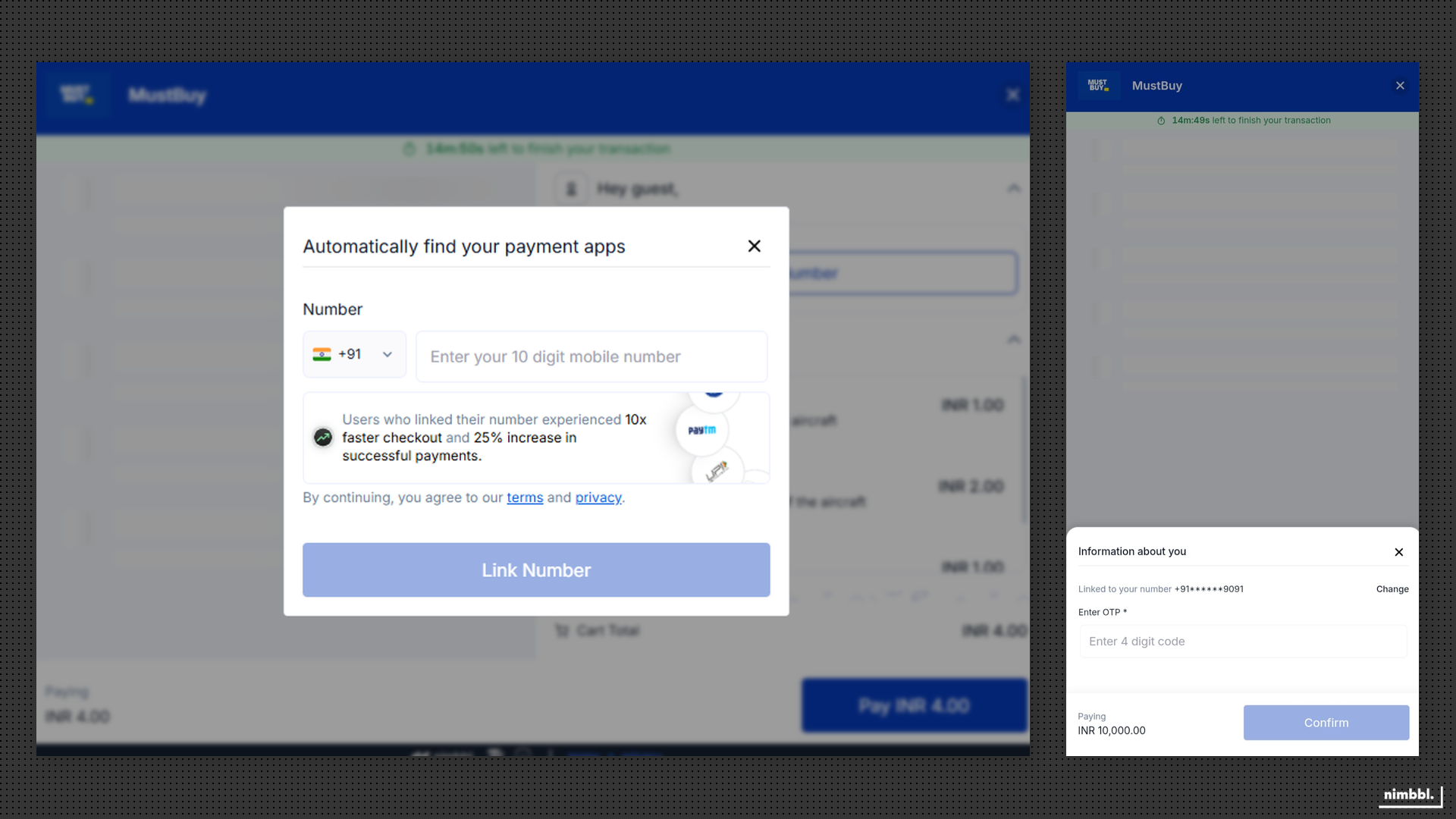 Returning customers on trusted devices skip OTP, while new sessions use OTP verification.
Address and Shipping Management
Sonic includes address collection flows with provider-based auto-fill to reduce manual entry. Customers can select from address providers (such as Shiprocket and Nimbbl) and auto-populate their shipping details with a single tap. Sonic also validates addresses and checks delivery eligibility, including COD availability, so customers know upfront whether their preferred delivery option is supported at their location.
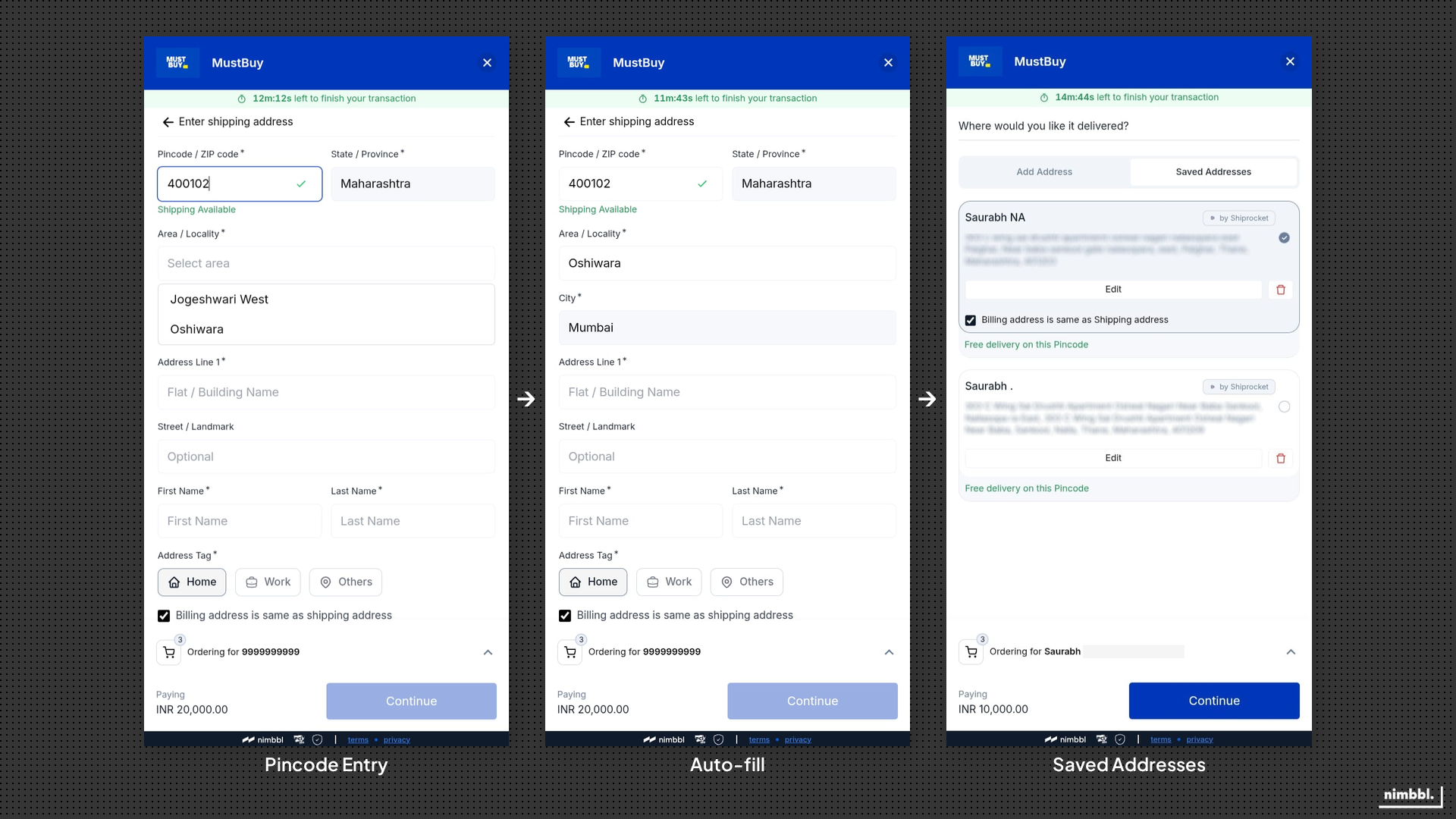 Saved addresses from connected providers let customers select a delivery address with a single tap.
Universal Payment Experience
Sonic provides a consistent payment experience across all supported payment modes: cards, UPI, netbanking, wallets, and EMI. Each payment mode follows a unified interaction pattern with clear grouping, real-time validation, and immediate feedback. Whether a customer is entering card details, selecting a UPI app, or choosing an EMI plan, the selection and confirmation flow remains predictable and easy to follow.
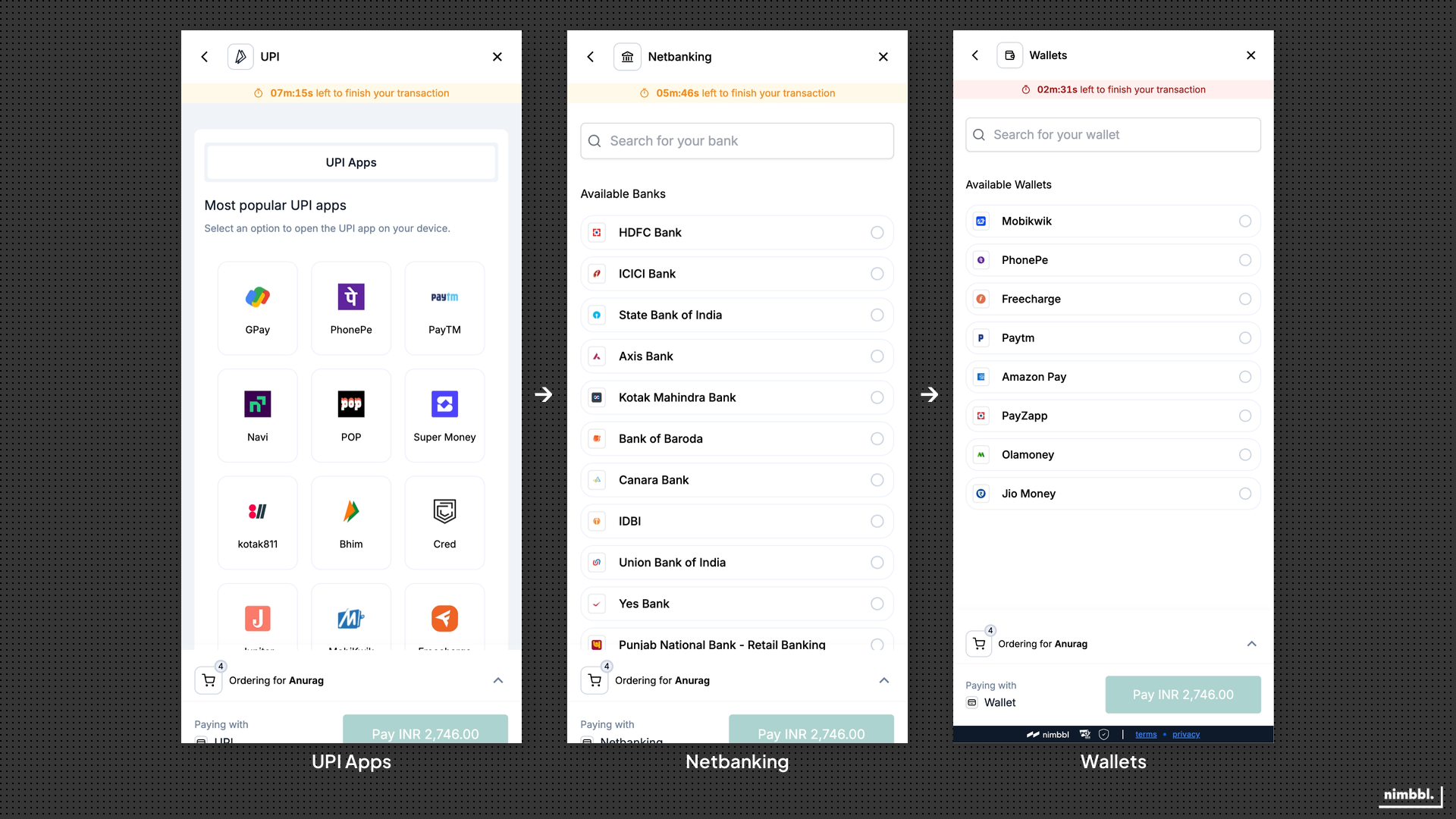 A consistent interaction pattern across UPI apps, netbanking, and wallets.
Hyper-Personalized Customer Experience
When personalization is enabled through Boostr, Sonic surfaces customer-relevant options to reduce time-to-pay and increase payment success.
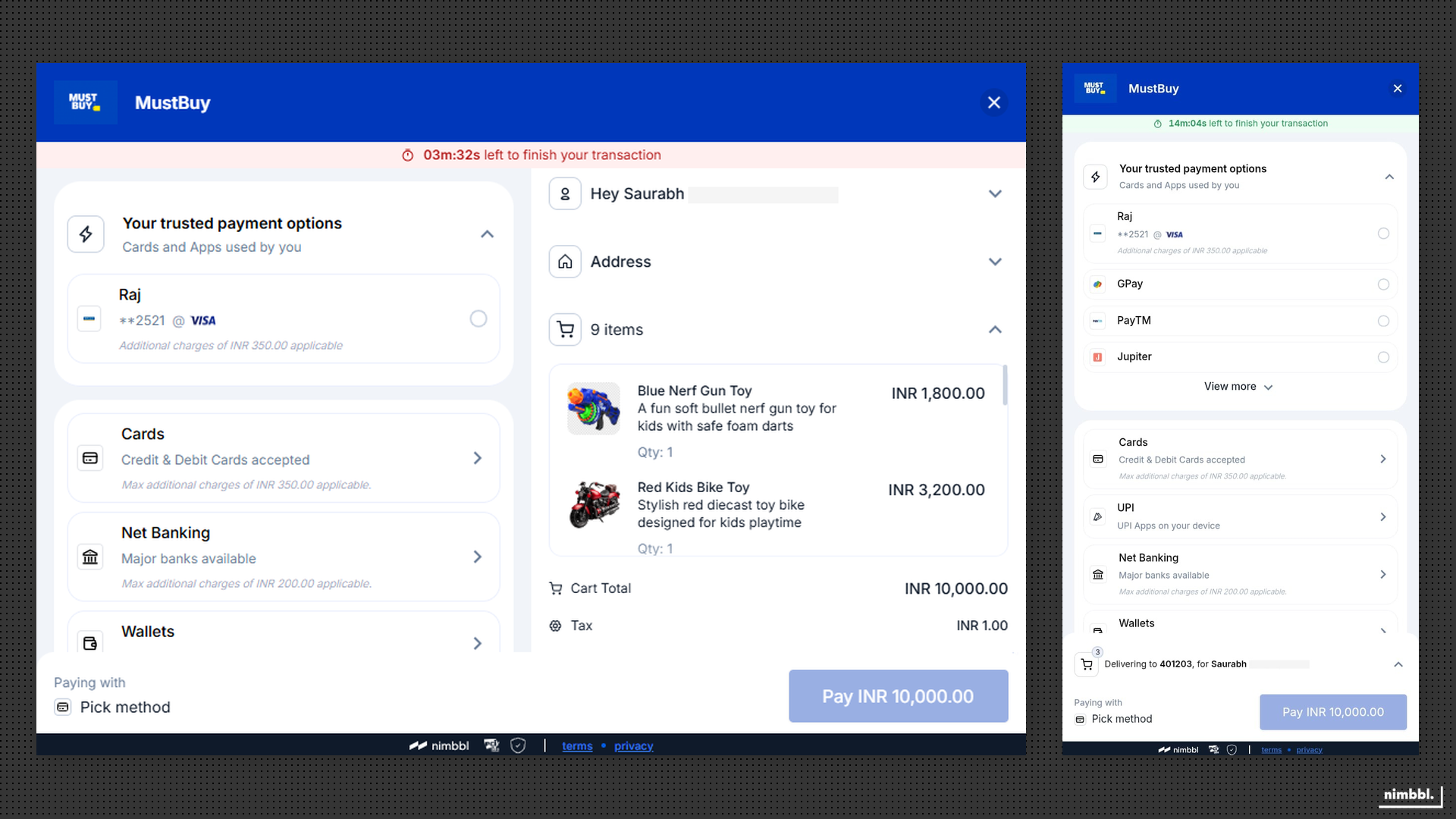 The fast payment tray surfaces saved instruments and preferred payment modes for returning customers.
Magik UPI
Magik UPI detects the customer's preferred UPI app based on their device and prior payment history, then surfaces it as the primary payment path. Eligible customers see their preferred UPI flow prominently in the fast payment tray, enabling one-tap payment without scrolling through the full payment mode list.
Intelligent Saved Cards Suite
For returning customers with saved cards, Sonic displays tokenized card instruments with relevant options such as EMI eligibility and currency conversion (DCC) when available. Customers can select a saved card and complete payment with minimal input, while the saved card experience adapts to show only the options that apply to each specific instrument.
Pay Later and Cardless EMI Eligibility
Sonic validates Pay Later and cardless EMI eligibility in real time based on the customer's profile. Only payment modes the customer can actually complete are displayed, which prevents failed payment attempts caused by ineligible selections.
Eligibility is checked in real time. If a customer does not qualify for a Pay Later or cardless EMI option, that option is not shown in the checkout, reducing confusion and failed payment attempts.
Smart Address Management
Smart address management extends the address flow with provider-based intelligence and verification. When a customer begins typing, Sonic can suggest addresses from connected providers, verify the input, and auto-populate the remaining fields. This reduces manual entry errors and speeds up the address collection step.
Personalized Offers and Targeting
When offer programs are enabled through Boostr, Sonic can display customer-specific incentives such as discounts and cashback offers during checkout. Offers are shown only when the customer matches the targeting criteria and the selected payment mode qualifies, keeping the experience relevant rather than cluttered.
Transparency and Safety
Payment Failures and Retries
Sonic communicates payment outcomes in plain language so customers understand what happened. When a payment fails, Sonic explains the reason clearly and guides the customer through retry options when available. For ambiguous outcomes where it is unclear whether funds were deducted, Sonic provides explicit guidance on the resolution path so customers are never left guessing.
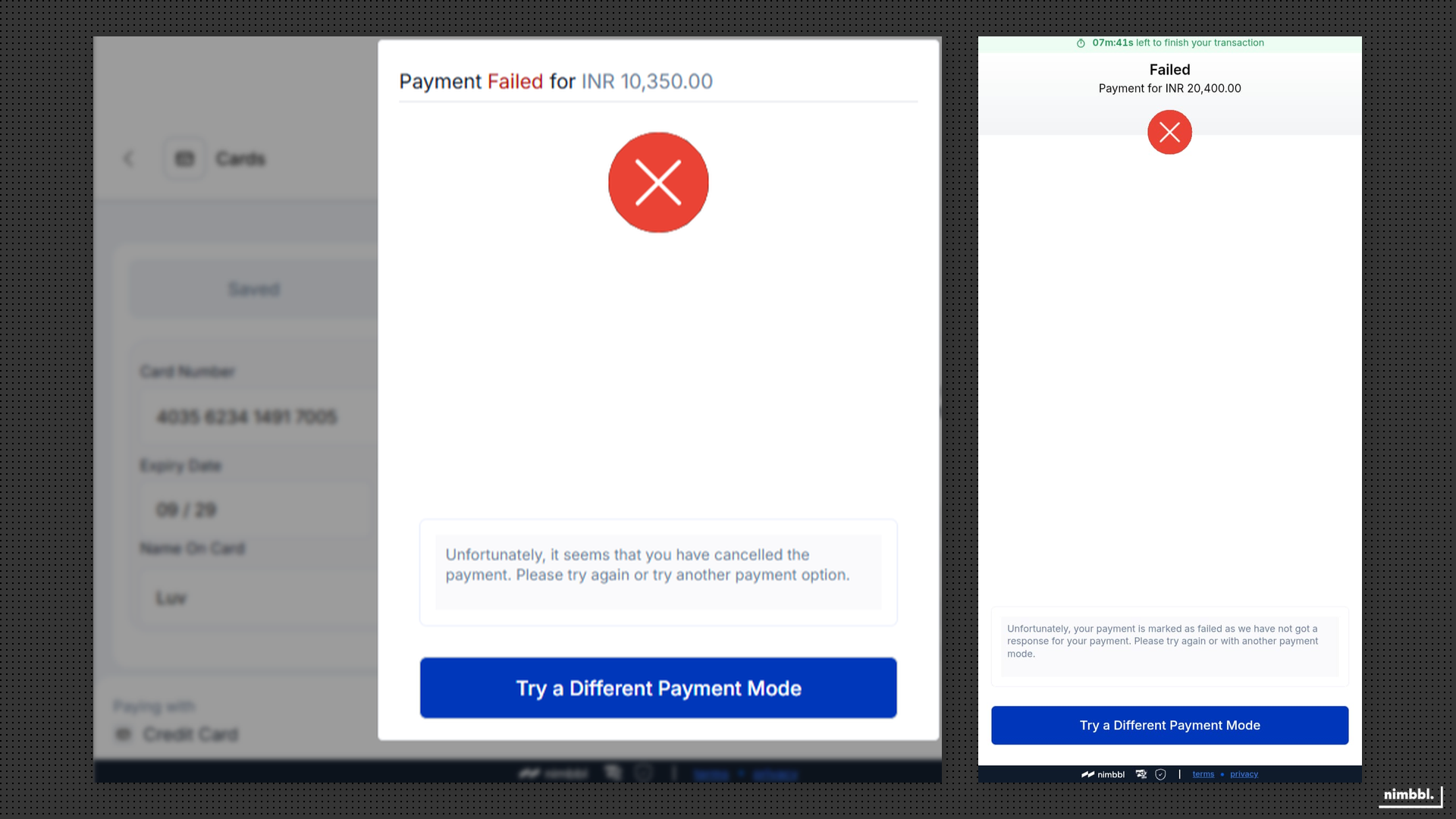 Payment outcomes are communicated clearly with guided retry options when a payment does not succeed.
Complete Pricing Transparency
Sonic shows full pricing details before the customer confirms payment. For EMI plans, this includes the installment amount, interest rate, total cost, and any processing fees. For transactions involving currency conversion, the exchange rate and converted amount are shown upfront so there are no surprise charges after confirmation.
All fees, EMI breakdowns, and currency conversion details are displayed before the customer confirms payment, ensuring complete pricing visibility.
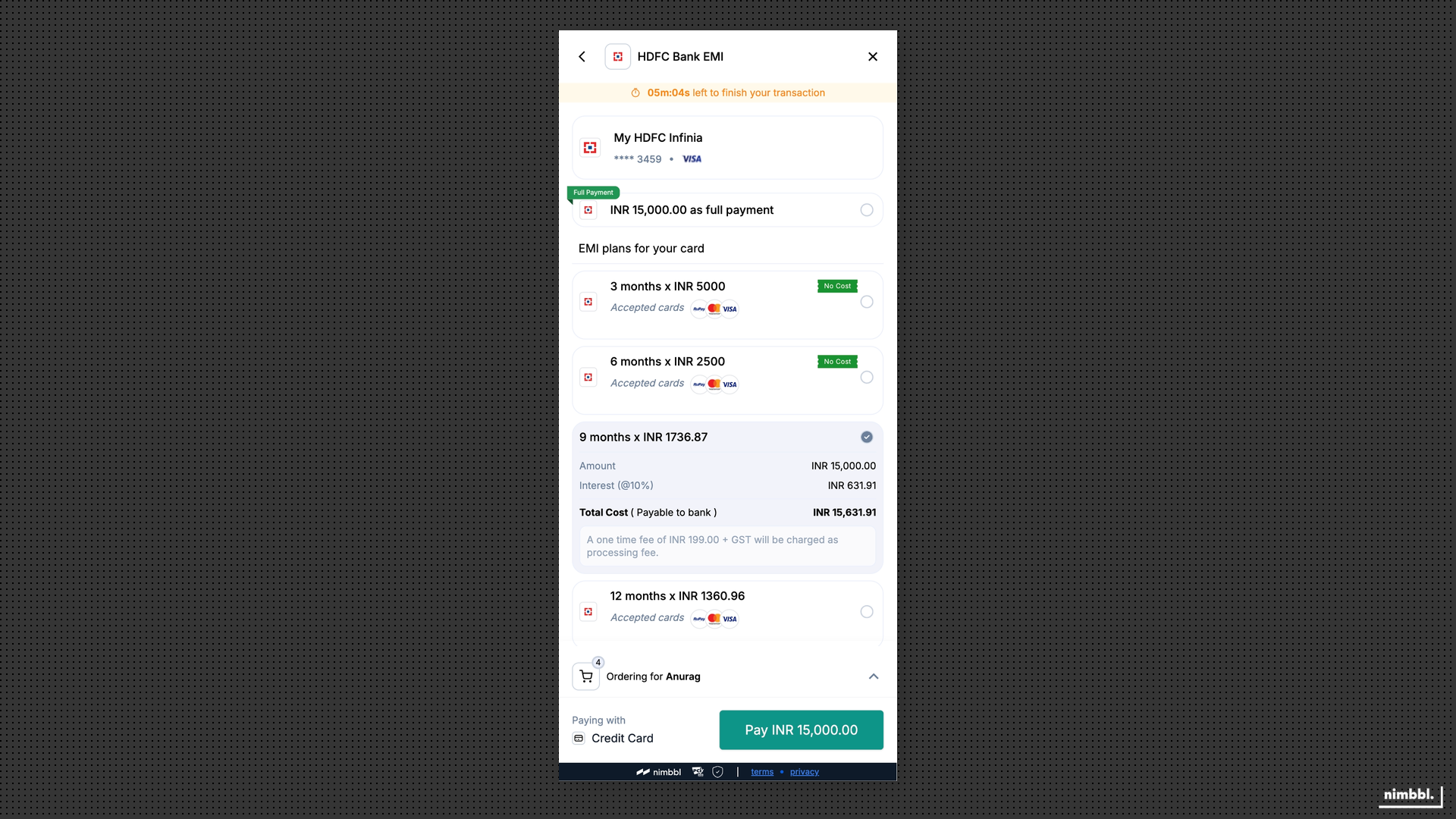 EMI pricing breakdowns display installment amounts, interest charges, and the total payable amount.
Privacy-First Experience
Sonic handles customer data with a focus on security and transparency. Sensitive information such as card numbers and personal identifiers is masked in the checkout interface. Card data handling follows RBI tokenization guidelines and PCI compliance requirements. Where consent is required, it is presented clearly so customers understand what they are agreeing to.
Card and personal data handling complies with RBI tokenization guidelines and PCI requirements. Sensitive data is masked in the interface and is not stored beyond what is required for payment processing.